
EXECUTIONS
A durable record of every governed action
Waxell Executions is a durable record layer for agentic systems — every workflow run produces a canonical, immutable execution record capturing what ran, which governance constraints applied, and what the outcome was.
An execution is the atomic unit of behavior in an agentic system — a single, discrete run of a workflow under defined governance constraints.
In a governed environment, executions are ephemeral. What persists is the record of what occurred.
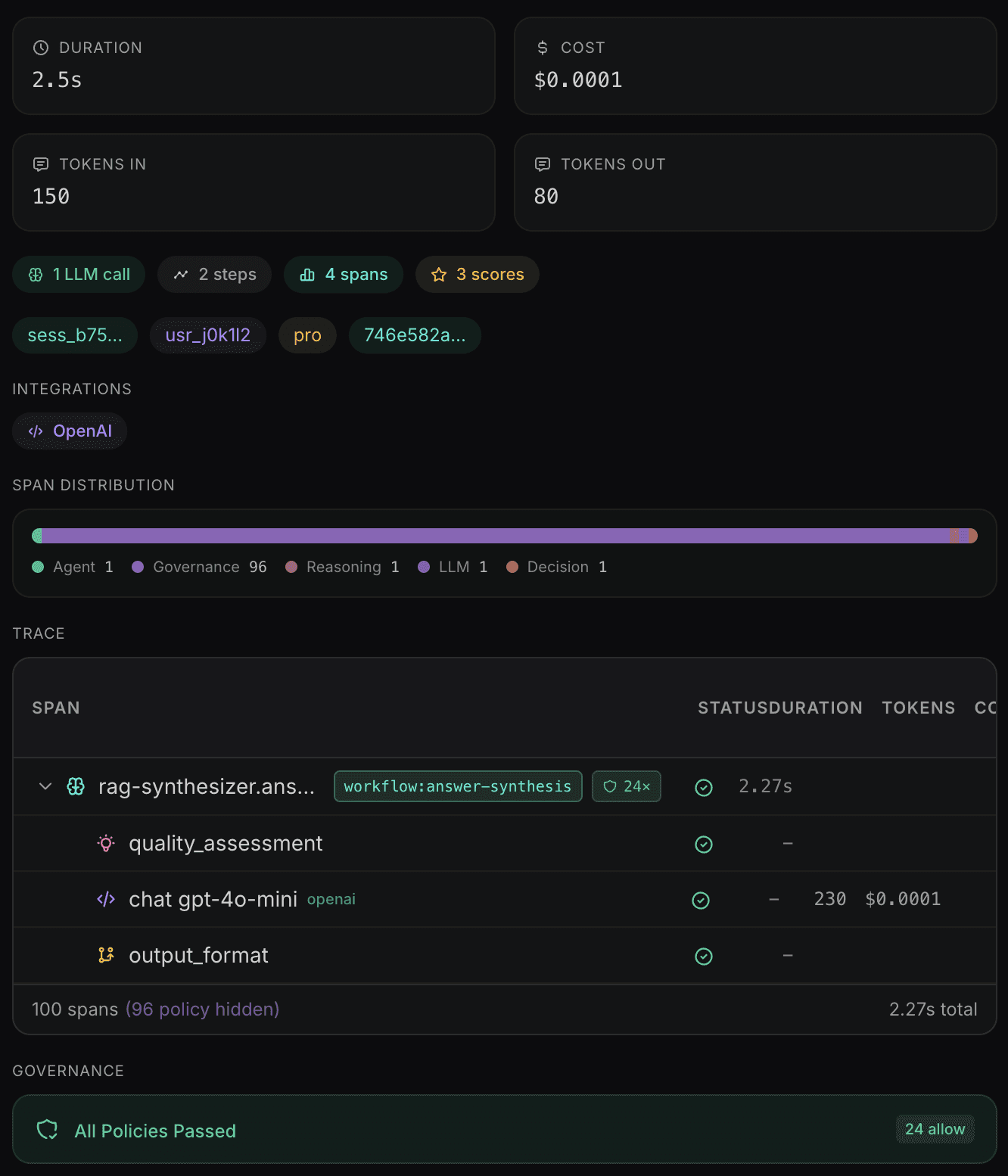

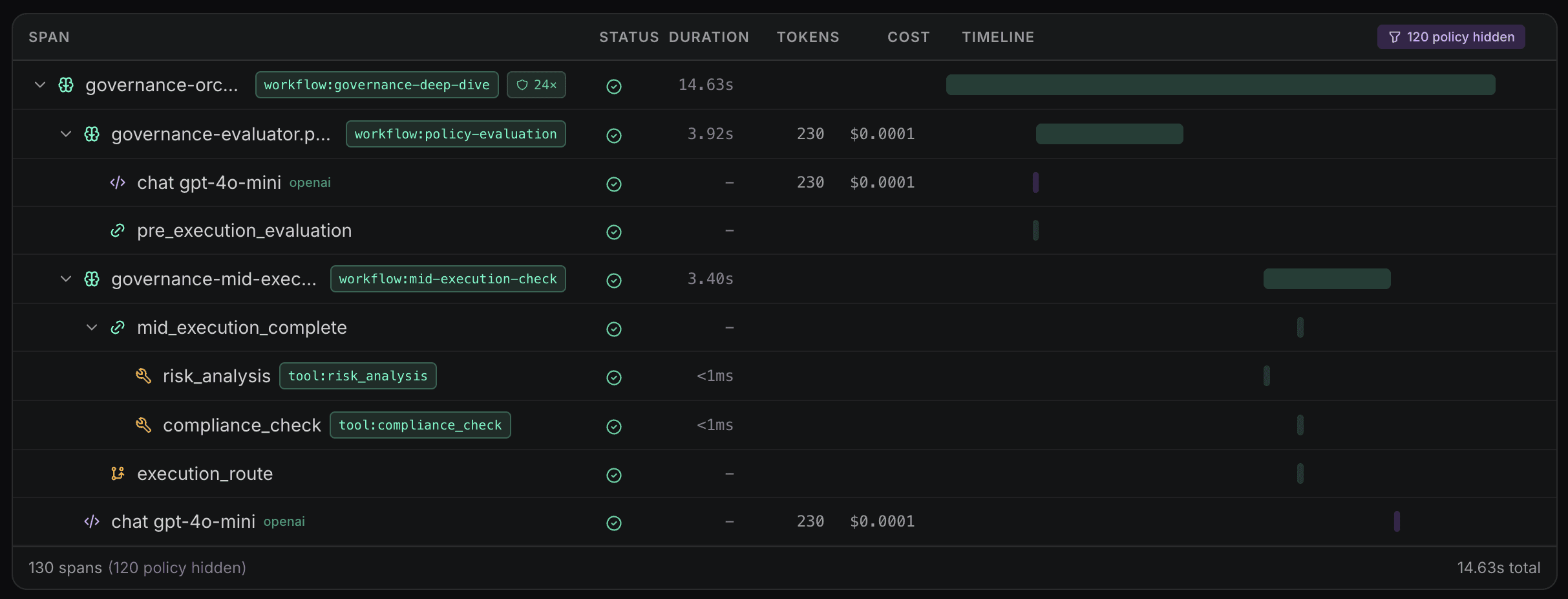
Every execution record in Waxell captures the same set of facts: which agent ran, which workflow it belonged to, which tools were called, which policies and budgets were evaluated, what the outcome was — and the governance state that was active at the time.
Teams reviewing an incident or responding to an audit have access to that record as it was captured at execution time. Not reconstructed from logs — recorded in the moment.
Execution records are captured automatically through Waxell Observe — the same SDK that instruments agent workflows with two lines of Python. Teams evaluating Waxell for compliance requirements can review the Waxell Assurance page for audit, controls, and operational trust details.
When something breaks, the investigation doesn't start from a blank log. Every execution record in Waxell was captured at the moment it ran — the agent, the workflow, the tools called, the policies evaluated, the outcome. It's there before you need it.
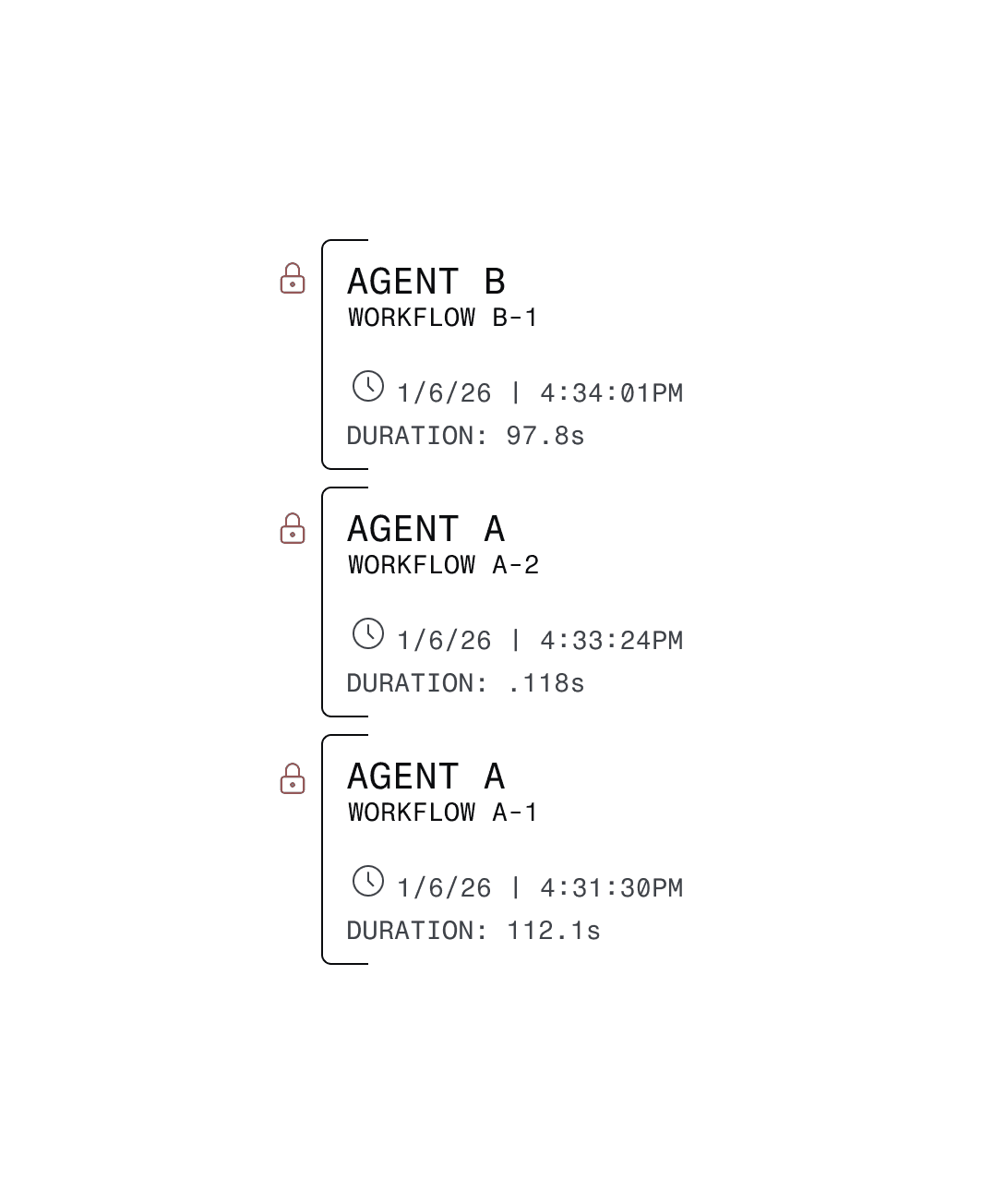
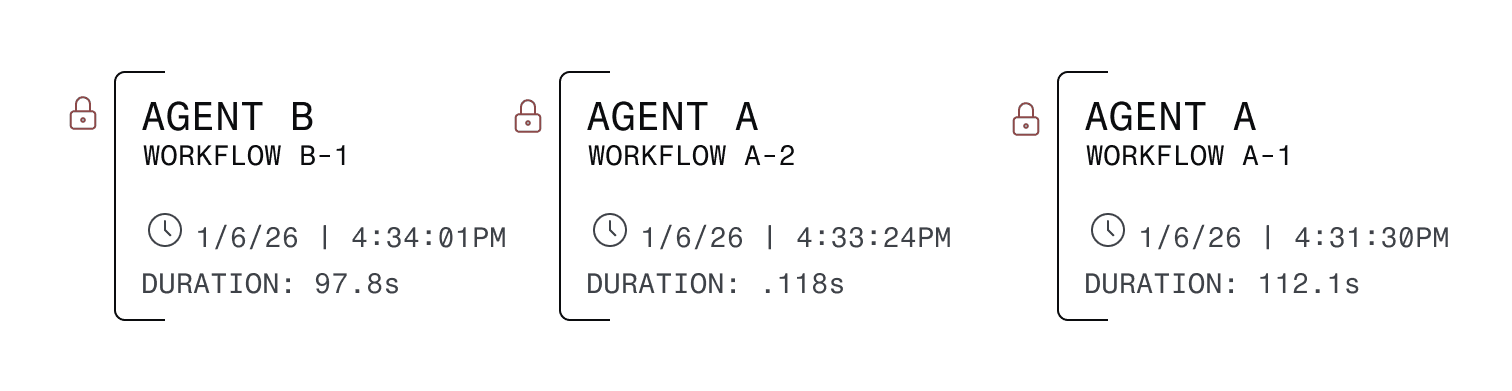
Immutability by design
Governance holds when executions fail
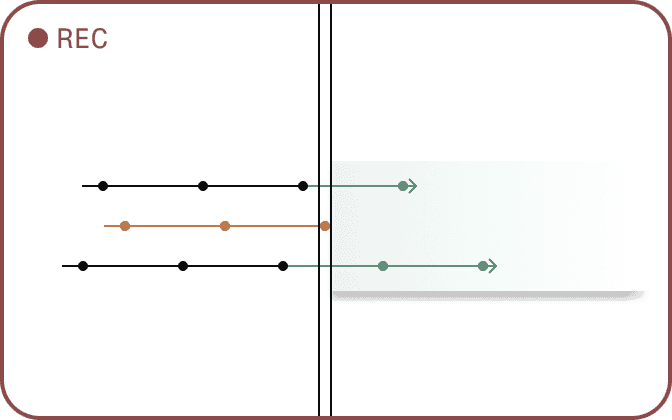
Executions are intentionally ephemeral. When an execution is interrupted, fails, or is stopped by a policy or budget limit, the broader system remains stable. Queues continue. Governance constraints remain in effect. The record of what happened — including why the execution stopped — persists.
The design holds when automation is continuous and failure is expected.
FAQ
What is an AI agent execution record?
An execution record is an immutable, canonical account of a single agent workflow run — capturing which agent executed, which tools were called, which policies and budgets were evaluated, the outcome, and the governance state that was active at the time. In Waxell, every execution produces this record automatically, whether the execution succeeded or was halted by a constraint.
How does Waxell create an immutable audit trail for AI agents?
Waxell records every execution at the moment it runs — not reconstructed from logs after the fact. Once an execution completes or terminates, its record is fixed and cannot be altered. The record persists linked to the exact governance state that was active during execution, making it a reliable basis for incident review, compliance audit, or operational investigation.
What's the difference between AI agent observability and execution records?
Observability captures telemetry — traces, spans, model calls, latency — as agents run. Execution records in Waxell are a governance artifact: a durable record that includes not just what happened, but which policies and budgets were evaluated and what the enforcement outcome was. Waxell Observe captures both.
Can Waxell execution records be used for compliance audits?
Yes. Waxell's execution records are immutable and linked to governance state — they meet the standard for audit evidence because they cannot be altered after the fact. Each record captures the exact agent, workflow, policies, and budgets in effect at the time of execution, with the outcome attached.
What happens to execution records when an agent fails or is stopped?
The record persists regardless of outcome. When an execution is halted by a policy or budget limit, the record captures why it stopped — which constraint was reached, at what point in the workflow, and what the enforcement decision was. Teams don't need to reconstruct failure states from logs because the execution record contains them.