TELEMETRY

Observing system behavior without altering it

Waxell Telemetry is a read-only observability layer for agentic systems — it captures traces, spans, model calls, token usage, and latency across every execution without participating in governance or altering system state.

Telemetry provides visibility into how agentic systems behave as they run. It exists to make execution understandable, diagnosable, and reviewable in production environments.

In a governed system, telemetry is observational. Telemetry does not control execution, enforce policy, or mutate system state.

Free during beta. 2-line setup.

Why do agentic systems need telemetry?

In production agentic systems, understanding what happened is as important as governing what's allowed to happen.


Without reliable telemetry, teams are forced to infer behavior from partial logs, side effects, or downstream outcomes. Diagnosis is slow and accountability is unclear.


Telemetry addresses this by preserving a faithful record of system behavior as it occurs, without interfering with execution.

Why do agentic systems need telemetry?

In production agentic systems, understanding what happened is as important as governing what's allowed to happen.


Without reliable telemetry, teams are forced to infer behavior from partial logs, side effects, or downstream outcomes. Diagnosis is slow and accountability is unclear.


Telemetry addresses this by preserving a faithful record of system behavior as it occurs, without interfering with execution.

What does Waxell Telemetry observe?

Telemetry reflects what the system did, not what it intended to do.


Waxell telemetry is derived from canonical execution events emitted by the orchestration layer and runtime. These events are recorded as execution proceeds and preserved independently of workflow logic.


Because telemetry is derived rather than authored, it remains consistent even as workflows change.

What telemetry captures

What telemetry captures

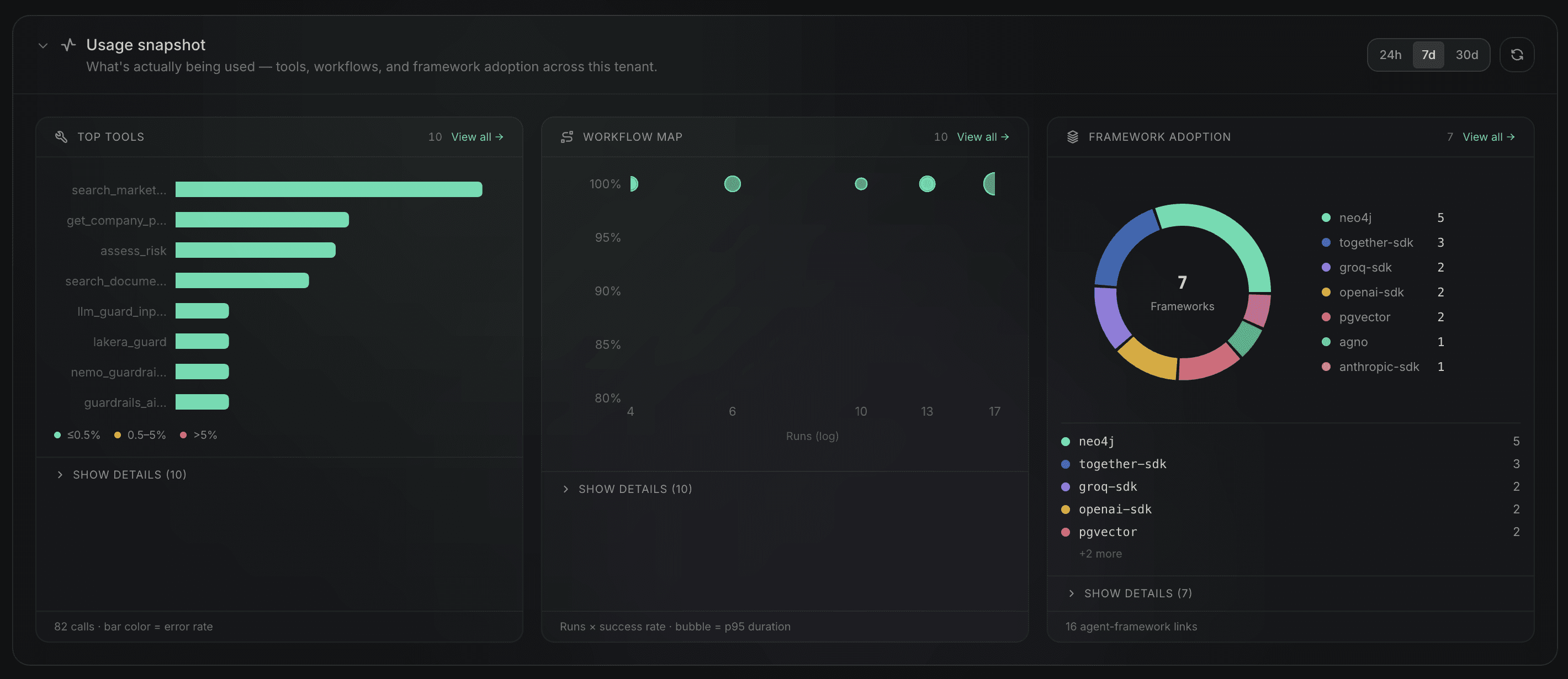
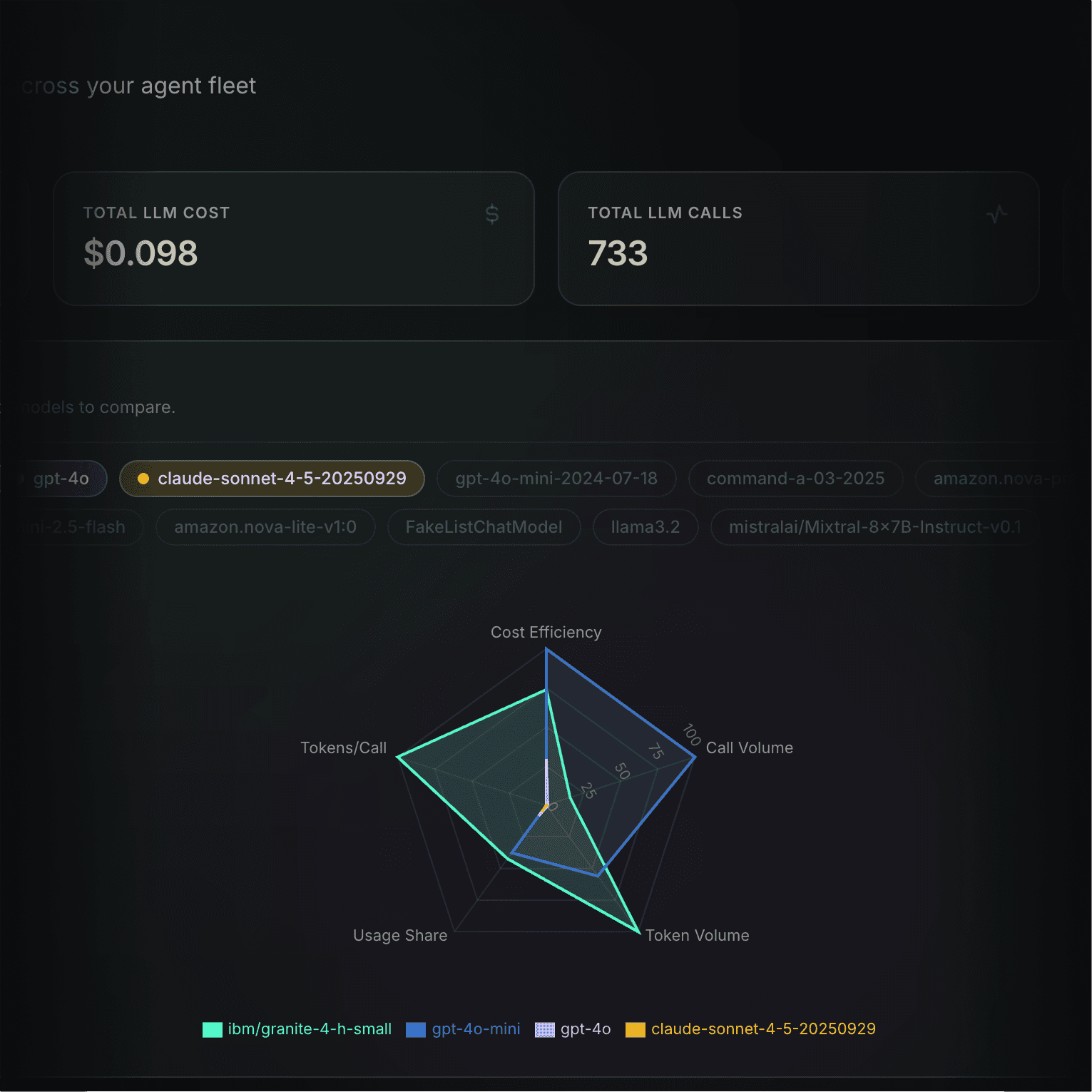
Waxell telemetry captures the signals that matter for diagnosis and review: traces and spans across workflow steps, model calls with input and output context, token usage per call, latency per execution step, and the governance evaluation points where policies and budgets were checked.


These signals are emitted by the runtime as execution proceeds. Nothing is reconstructed afterward.


Waxell Observe captures these signals automatically — a two-line SDK initialization, no changes to agent logic. The signals feed into execution records, the durable per-run artifacts available for review and audit.

Traces, spans, token counts, latency per step, governance evaluation points — all of it, for every agent execution, from the moment you add Waxell Observe. Two lines of Python. No code changes to your agents.

READ ONLY BY DESIGN

Telemetry is immutable: once recorded, it cannot be altered, ensuring an unambiguous record for diagnosis, review, and audit.

EXPLAINING OUTCOMES

Telemetry records execution paths and decision context, enabling post-hoc analysis of outcomes without reconstructing intent or replaying logic.

VISIBILITY WITHOUT

AUTHORITY

Telemetry allows continuous observation of system load and execution behavior without impacting running or future workflows.
VISIBILITY WITHOUT AUTHORITY

Telemetry allows continuous observation of system load and execution behavior without impacting running or future workflows.

How is Waxell Telemetry separated from governance?

Telemetry is intentionally separated from governance state.


Telemetry does not participate in enforcement, decision-making, or control. It cannot pause execution, override policy, or influence outcomes. No agent or workflow writes directly to telemetry stores.


This separation ensures that observing the system never introduces additional risk.

Telemetry is intentionally separated from governance state.


Telemetry does not participate in enforcement, decision-making, or control. Telemetry cannot pause execution, override policy, or influence outcomes. No agent or workflow writes directly to telemetry stores.


Observing the system introduces no additional risk. For enforcement behavior — policies, budgets, and kill-switch conditions — see Waxell Policies, the governance layer that operates alongside telemetry.

Key properties

Execution records are immutable. Once a telemetry event is recorded, it cannot be altered — ensuring the record remains a reliable basis for diagnosis, review, and audit, even as systems evolve and workflows change.


Telemetry records execution paths, not just outcomes. The decision context captured at each step explains why the system behaved as it did, not only what happened at the end.

From here

Waxell is available now.


Install the SDK, connect to your instance, and start capturing what your agents actually do. Governance, policy enforcement, cost tracking, and full telemetry — running from the moment you initialize.

Free during beta. 2-line setup.

FAQ

What is AI agent telemetry?

AI agent telemetry is a read-only record of what an agentic system did as it ran — capturing traces, spans, model calls, token usage, latency, and governance evaluation points from every execution. In Waxell, telemetry is derived from canonical runtime events and cannot be altered after the fact, making it a reliable basis for diagnosis, review, and audit.

What's the difference between AI agent telemetry and observability?

Observability is the broader capability — the ability to understand a system's behavior from its outputs. Telemetry is the data that makes observability possible: the specific traces, spans, model calls, and decision points captured during execution. Waxell Telemetry is the structured, immutable record layer; Waxell Observe is the SDK that captures it.

How does Waxell capture AI agent telemetry?

Waxell Observe instruments agent workflows with two lines of Python — added before existing imports, with no changes to agent logic. After that, every execution emits telemetry automatically: traces and spans across workflow steps, model calls with input and output context, token usage per call, and latency per execution step.

Does telemetry affect agent performance or behavior?

No. Waxell Telemetry is intentionally separated from execution and governance. Telemetry cannot pause execution, override policy, or influence outcomes. No agent or workflow writes to telemetry stores directly. Observing the system introduces no additional risk to running or future workflows.

Can Waxell telemetry be used for compliance and audit?

Yes. Telemetry records are immutable — once captured, they cannot be altered. Each record is linked to the governance state that was active during execution, including which policies and budgets were evaluated and what the enforcement outcome was. Waxell Telemetry is usable as audit evidence without additional log reconstruction.

From here

Waxell is available now.


Install the SDK, connect to your instance, and start capturing what your agents actually do. Governance, policy enforcement, cost tracking, and full telemetry — running from the moment you initialize.

Free during beta. 2-line setup.

FAQ

What is AI agent telemetry?

AI agent telemetry is a read-only record of what an agentic system did as it ran — capturing traces, spans, model calls, token usage, latency, and governance evaluation points from every execution. In Waxell, telemetry is derived from canonical runtime events and cannot be altered after the fact, making it a reliable basis for diagnosis, review, and audit.

What's the difference between AI agent telemetry and observability?

Observability is the broader capability — the ability to understand a system's behavior from its outputs. Telemetry is the data that makes observability possible: the specific traces, spans, model calls, and decision points captured during execution. Waxell Telemetry is the structured, immutable record layer; Waxell Observe is the SDK that captures it.

How does Waxell capture AI agent telemetry?

Waxell Observe instruments agent workflows with two lines of Python — added before existing imports, with no changes to agent logic. After that, every execution emits telemetry automatically: traces and spans across workflow steps, model calls with input and output context, token usage per call, and latency per execution step.

Does telemetry affect agent performance or behavior?

No. Waxell Telemetry is intentionally separated from execution and governance. Telemetry cannot pause execution, override policy, or influence outcomes. No agent or workflow writes to telemetry stores directly. Observing the system introduces no additional risk to running or future workflows.

Can Waxell telemetry be used for compliance and audit?

Yes. Telemetry records are immutable — once captured, they cannot be altered. Each record is linked to the governance state that was active during execution, including which policies and budgets were evaluated and what the enforcement outcome was. Waxell Telemetry is usable as audit evidence without additional log reconstruction.

Waxell

Waxell provides observability and governance for AI agents in production. Bring your own framework.

© 2026 Waxell. All rights reserved.

Patent Pending.

Waxell

Waxell provides observability and governance for AI agents in production. Bring your own framework.

© 2026 Waxell. All rights reserved.

Patent Pending.

Waxell

Waxell provides observability and governance for AI agents in production. Bring your own framework.

© 2026 Waxell. All rights reserved.

Patent Pending.